


The economic relationship between Malaysia and Japan has been cultivated with purpose over four decades. In Japan, Malaysia found not only new markets, but also a model of discipline, industrial rigor and focused modernization that helped shape our own trajectory. That influence fundamentally altered Malaysia’s economic landscape, charting a decisive path from commodity dependence to manufacturing strength.
When I met with senior Japanese corporate leaders in Tokyo in June, I laid out a stark reality: Nations and businesses are looking beyond cost and “just-in-time” logistics. Investment decisions today weigh geopolitical realignment, supply chain resilience, trust and the ability to execute at speed and scale.
Prime Minister Anwar Ibrahim’s meeting with Prime Minister Sanae Takaichi during his official visit to Tokyo in June marked a new chapter for a reinvigorated Malaysia-Japan relationship.
Japan remains a cornerstone partner, accounting for $19.65 billion (¥3.1 trillion) in trade, with manufactured goods making up 78.6% of that total. Electrical and electronic products led the way, representing nearly one-third of total value at 31.4%, followed by liquefied natural gas at 12.4%.
As of the end of December 2025, Japanese-implemented manufacturing projects totaled $29.4 billion across 2,871 projects, directly supporting 346,909 jobs in Malaysia. Japan ranks as our fifth-largest foreign investor by implemented projects, a clear marker of the depth of our economic ties.
This is not accidental. Japanese investors choose Malaysia because we offer predictability, robust economic fundamentals and a competitive environment. They see our unwavering political neutrality, our strategic location at the heart of the Association of Southeast Asian Nations and our sound fiscal position as a stable, trusted anchor amid global volatility.
Under our New Incentive Framework, we prioritize capital that delivers depth: genuine technology transfer, deep integration with local supplier ecosystems, strict sustainability standards and higher economic complexity.
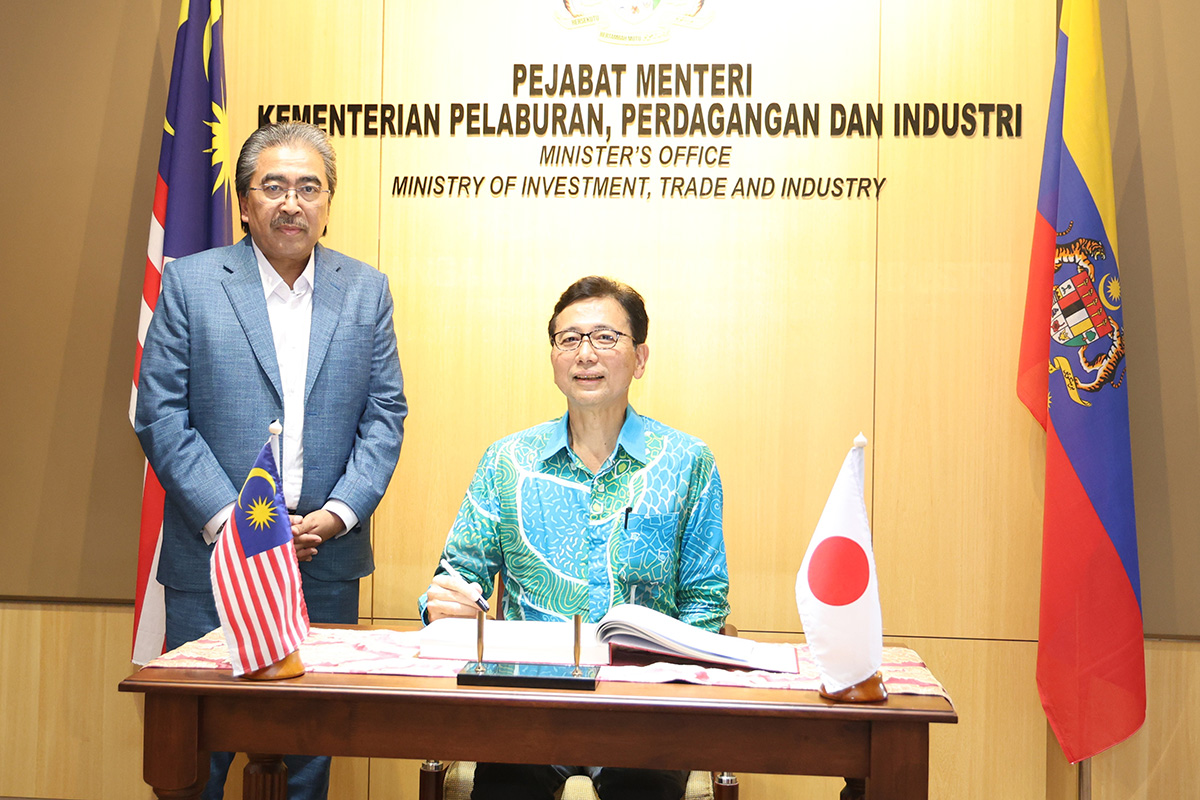
When Takaichi unveiled Japan’s ¥370 trillion growth strategy focusing on artificial intelligence, semiconductors and energy security, we saw an immediate, operational fit with Malaysia’s industrial ambitions. Japan brings world-class technological expertise and multiyear funding, while Malaysia provides a stable, neutral and cost-efficient platform to scale and commercialize those capabilities.
The execution is already underway. Joint efforts to develop customized edge-AI chips are one example. Here, we are not simply buying components off the shelf but building capability together. This marks a structural shift: Integrating Japan’s cutting-edge automation expertise with Malaysia’s growing pool of precision engineering talent is taking center stage in complex chip design.
Malaysia and Japan are constructing one of Asia’s most profitable, resilient and future-ready industrial partnerships. The history between our nations runs deep. Our shared mandate now is to deepen that cooperation, convert potential into high-value production and ensure the benefits are widely felt across both societies.

