


As Tokyo and London — two of the world’s leading financial centers — deepen cooperation on financial innovation, the partnership between the Tokyo Metropolitan Government and the City of London Corporation is now led by two prominent women.
“Efforts are underway in both London and Tokyo to develop a public-private financial ecosystem to strongly support innovative technologies and creativity. The times are changing at an extremely rapid pace, and even with the help of continually evolving AI (artificial intelligence), it is difficult to foresee what lies ahead for our world,” Tokyo Gov. Yuriko Koike told a financial innovation seminar in mid-June.
“That is precisely why there is now a pressing need for the wisdom and ideas of people, which will help solve societal challenges and enrich our lives. I strongly believe that the power of women, who account for half the population, is so essential,” Koike said.
The Tokyo-London Financial Innovation Seminar 2026 was held on June 18 at Tokyo Innovation Base, with Koike joined by visiting Susan Langley, the lady mayor of the City of London Corporation, as the two cities renewed their commitment to collaborate on financial innovation. Langley is only the third woman to hold the title governing London’s financial district in its history, which dates to 1189. Prior to the seminar, Langley also visited the metropolitan government office for talks with Koike.
In 2017, the Tokyo Metropolitan Government and the City of London Corporation signed a memorandum of understanding on financial-sector cooperation. The MOU was revised in September 2025 to further strengthen ties and advance joint initiatives on financial innovation and investment. At the seminar, public- and private-sector participants from both cities explored ways to build globally competitive and accessible fintech ecosystems.
Tokyo’s rising global standing
According to the 2026 edition of the Global Financial Centres Index, published by London-based think tank Z/Yen, Tokyo climbed from 15th place last year to 10th, regaining a spot in the global top 10. The index ranks cities on factors including human capital, infrastructure, business environment, financial sector development and reputation.
The report reflects Tokyo’s progress since being designated a Special Zone for Financial and Asset Management Businesses, a designation seen as testament to close collaboration between the national and metropolitan governments. Tokyo was also named among the cities survey respondents expect to grow in significance over the next two to three years.
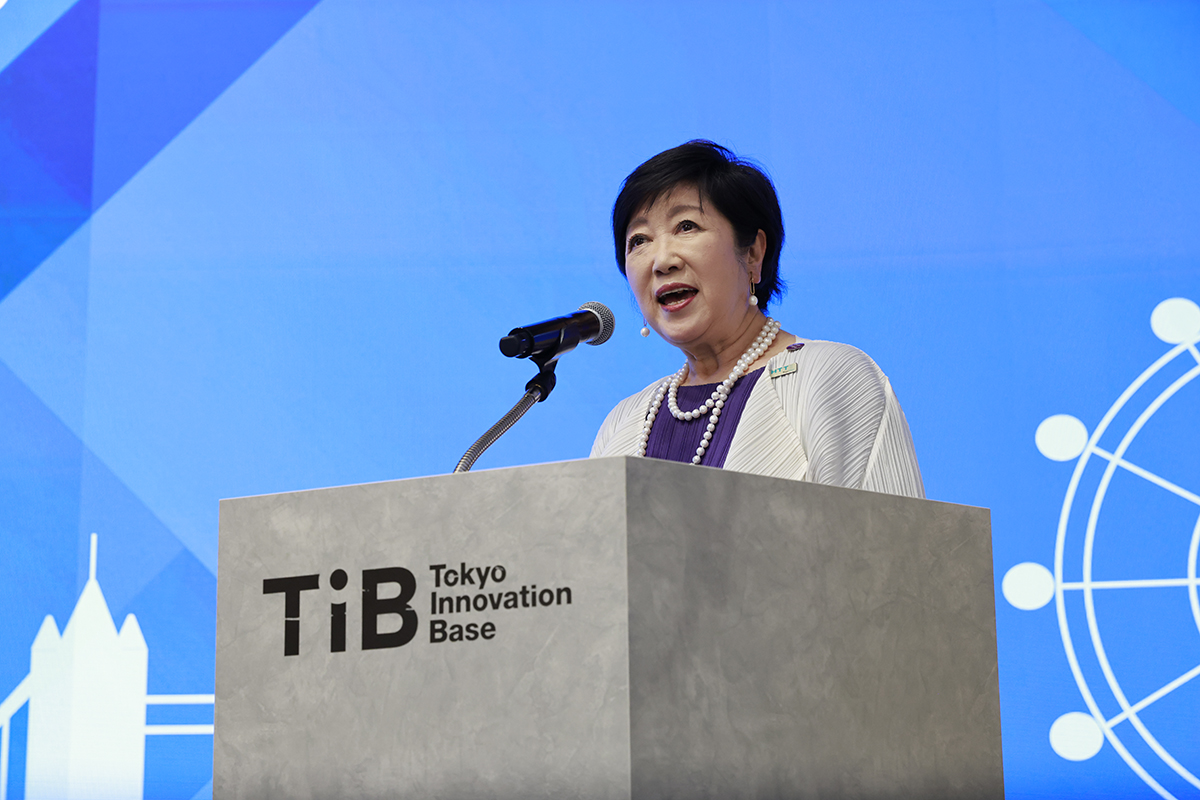
The partnership with London’s financial hub, underpinned by the revised MOU, has played a key role in raising Tokyo’s profile in global finance. Koike said the relationship rests on mutual trust, itself grounded in shared values such as the rule of law, democracy and freedom of speech and the press.
Since the MOU was signed, the number of U.K. companies operating in Tokyo has increased, while London has supported the overseas expansion of Tokyo-based startups. It has also allowed the metropolitan government to draw on London’s experience in shaping its own initiatives to boost financial sector innovation, Koike noted.
A shared commitment
From London’s side, Langley emphasized the value of deepening ties with Tokyo. “In these uncertain geopolitical times, it is important for partners with shared business approaches, regulations and values to work together. And with the ties between us, I can think of no better cities than Tokyo and London,” she said.
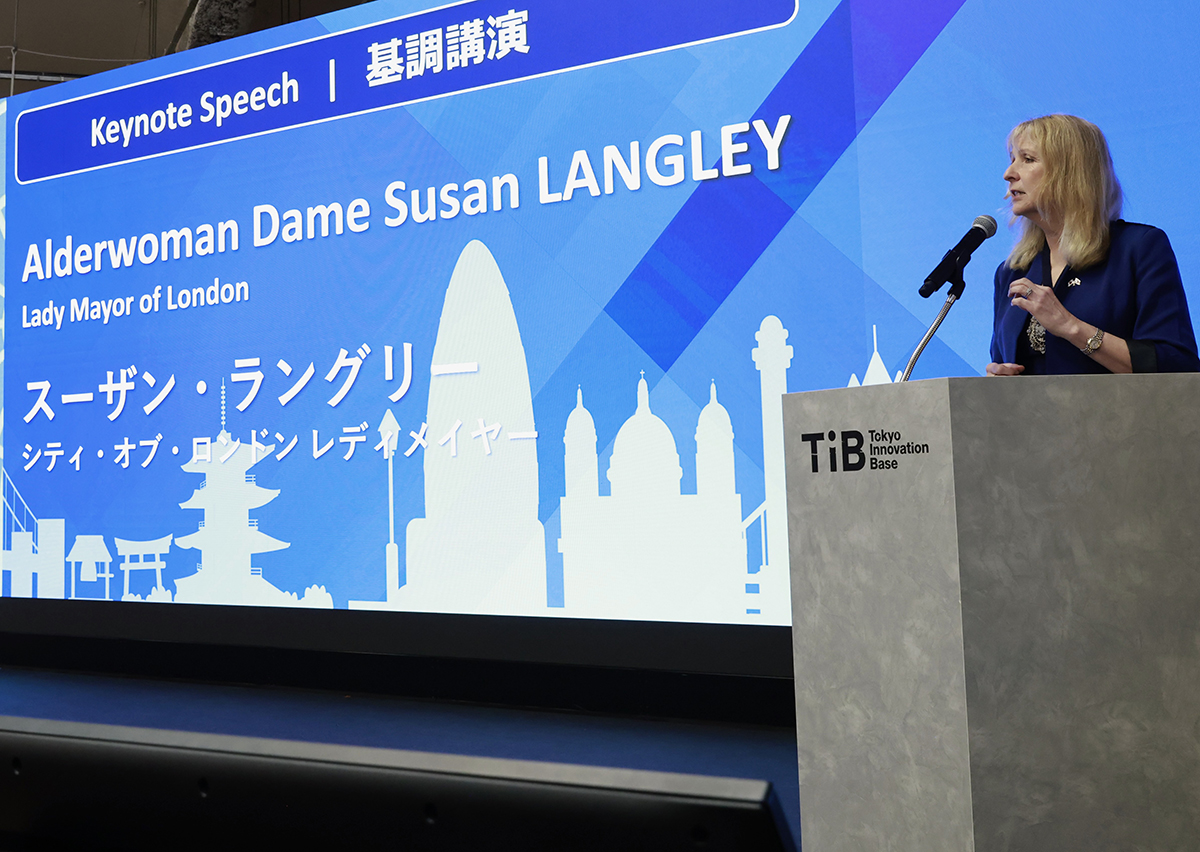
Langley noted that Japanese investment in Britain has doubled over the past decade, with close to 1,000 Japanese firms now based in the U.K. Since the MOU was first signed in 2017, she said, it has connected the two financial centers and given firms on both sides a platform to increase trade and investment.
She also pointed to London’s role as a trusted partner amid global uncertainty, noting that stability and predictability are drawing renewed investment as countries reassess their international relationships — with Japan among the partners London values most.
Building ecosystems together
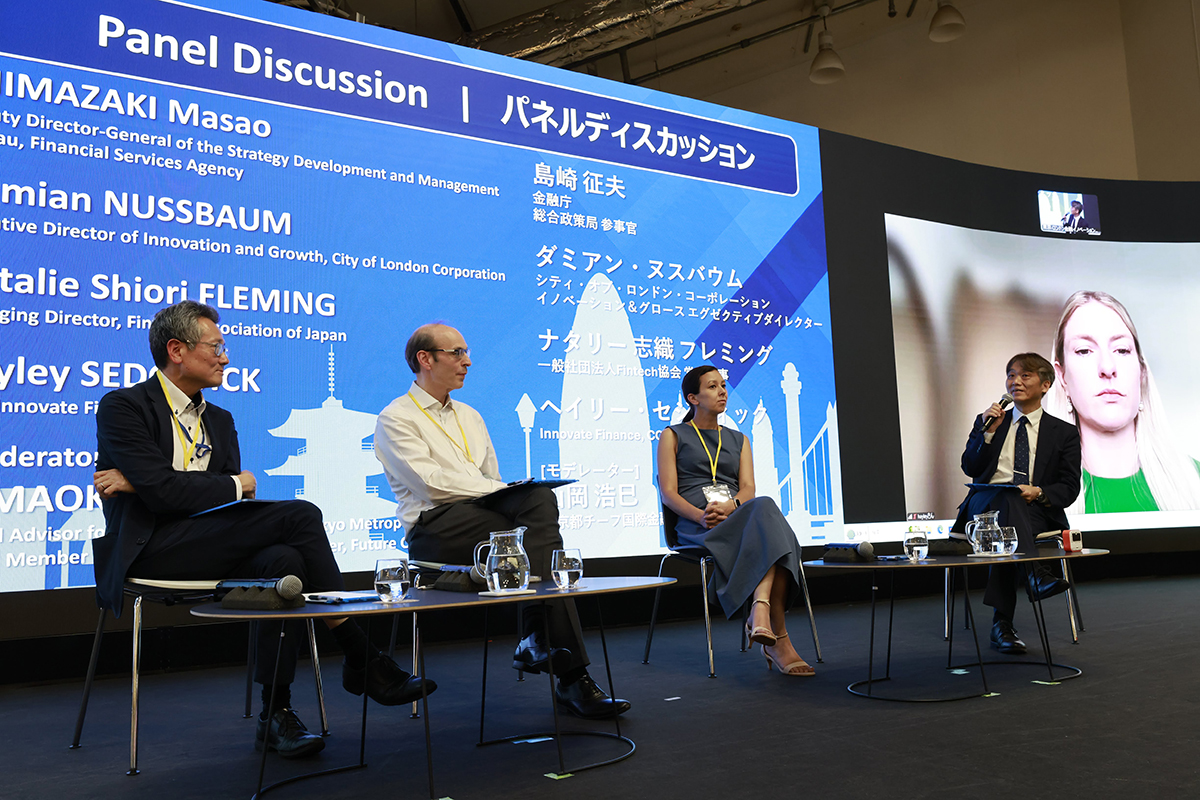
During the seminar, experts from both cities discussed concrete efforts to build globally competitive fintech ecosystems and expand two-way cooperation. Panelists agreed that Tokyo and London face similar challenges, making information-sharing and exchanges — including seminars like this one — essential to addressing them together (speakers’ titles accurate at time of event).
“Innovation doesn’t arise from new technology alone. Rather, it is created through continuous interaction among people with diverse backgrounds, who bring together different knowledge, experiences and perspectives,” said Masao Shimazaki, deputy director general of the Strategy Development and Management Bureau of the Financial Services Agency. He stressed the importance of accumulating knowledge and human relationships without letting them scatter, and of actively creating opportunities for knowledge-sharing and dialogue between the public and private sectors.
Shimazaki noted that the Japanese government supports financial innovation through a range of measures, including enhancing regulatory clarity and accessibility, promoting the supply of growth capital to startups and facilitating the entry of overseas financial firms into Japan.
Hiromi Yamaoka, special advisor for international finance at the Tokyo Metropolitan Government, said the metropolitan government hosts events such as SusHi Tech Tokyo, which drew around 61,000 participants from around the world — a record number — in April, to foster an innovation ecosystem and support startups.
The metropolitan government has established the Tokyo One-Stop Business Establishment Center to help new entrants launch startups in the capital. Various other support programs, including the Business Development Center Tokyo, the International Residents Support Center Tokyo and the Overseas Financial Corporation Establishment and Support Subsidy Program, are underway.
Natalie Shiori Fleming, managing director of the Fintech Association of Japan, said that thanks to the forward-thinking and proactive support of the Japanese government and its regulators, the fintech market here has “definitely matured” over the past decade. “We see more nonfinancial service companies coming into the market, (and) more scale-ups versus startups,” she said, adding that she sees “so much growth and opportunity for the next decade in the fintech space” in Japan.
As Tokyo climbs the ranks of global financial centers, its partnership with London stands as a model for how trust, shared values and sustained dialogue can drive financial innovation forward.
This article is sponsored by the Tokyo Metropolitan Government.


