


For more than a century, Tokyo has learned from natural disasters. Experiences such as the 1923 Great Kanto Earthquake and severe flooding from large typhoons have shaped the city’s approach to infrastructure development and disaster preparedness.
Tokyo’s response has never been limited to restoring what was lost. Rather than simply rebuilding damaged facilities, the city has consistently taken a long-term view to strengthening urban infrastructure and preparing for future risks. This commitment to looking beyond the immediate and investing in the future has become the foundation of modern Tokyo.
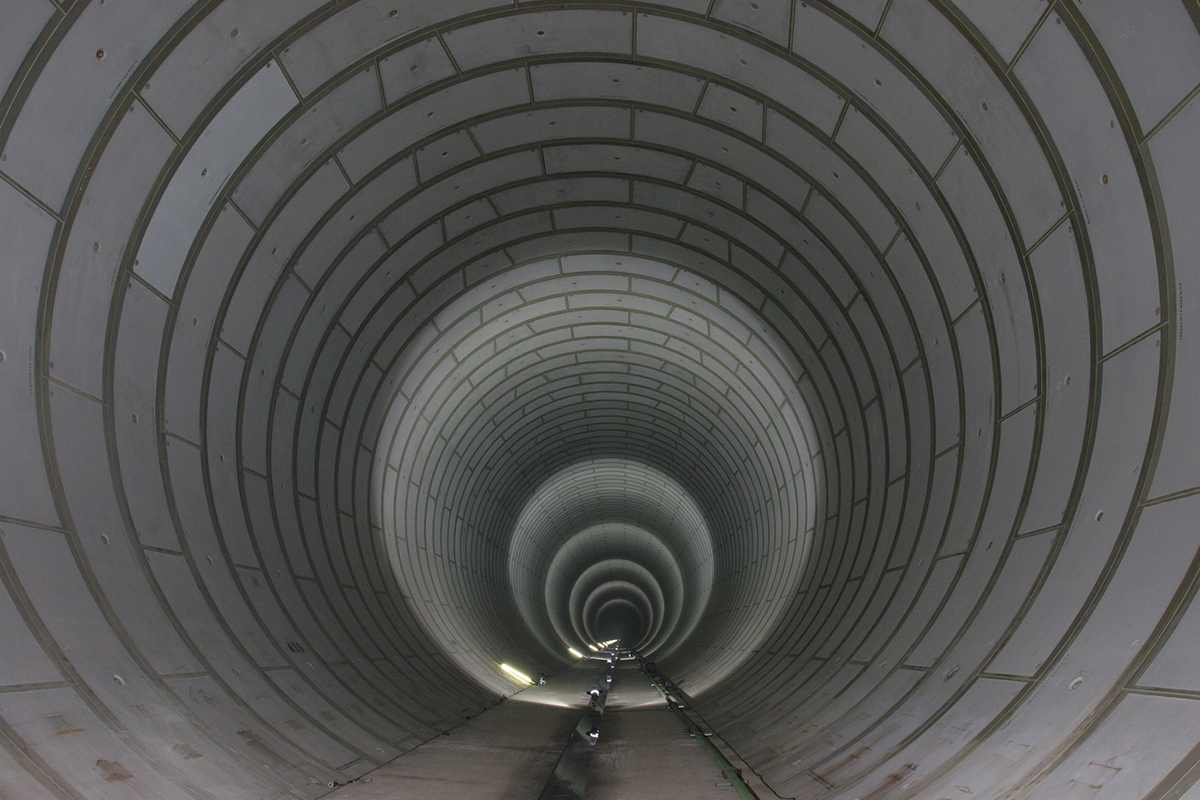
As part of its flood management efforts, Tokyo has expanded river channels and built underground regulating reservoirs beneath roads and other areas to temporarily store stormwater. Through these and other measures, potential damage has been significantly reduced relative to past storms.
When nothing happens
The results of the Tokyo Metropolitan Government’s long-standing efforts in earthquake preparedness meanwhile have been confirmed by concrete figures. Through the seismic retrofitting of buildings, the fireproofing of dense, wooden residential areas, and the removal of utility poles, the projected damage from an inland quake has fallen by about 30% to 40% over the past decade.
Critical infrastructure has also been strengthened. As of the end of fiscal 2024, about 92% of water supply pipelines and 87% of sewer pipelines connected to evacuation centers, disaster base hospitals and other key facilities had been made earthquake-resistant, reflecting progress in the city’s efforts to ensure these lifelines remain operational during and after earthquakes.
Tokyo’s disaster-prevention efforts have steadily produced results. Yet the benefits of those efforts are often difficult to recognize.
Natural hazards themselves cannot be prevented. However, through continuous investment, preparedness and the strengthening of urban infrastructure, large-scale damage and disruption from major storms and quakes can be mitigated, allowing people to continue their daily lives and enabling the city to maintain its essential functions.
In this sense, ensuring that “nothing happens,” protecting lives and sustaining urban functions even in the face of disaster is the very essence of urban resilience.
Building the future of Tokyo
Based on this understanding, the Tokyo Metropolitan Government launched the Tokyo Resilience Project in December 2022.
As climate change increases the frequency and intensity of heavy rainfall and as the probability of a major temblor striking the capital directly continues to grow, the city is building upon decades of investment to elevate resilience to a new level. The project aims to realize a more resilient Tokyo by the 2040s.
The Tokyo Resilience Project is structured around five major risks: floods and storms, earthquakes, volcanic eruptions, power and communications outages and infectious diseases. It also incorporates perspectives developed from compound disasters to systemize these measures. One of the defining characteristics of the project is the use of “backcasting,” in which policies are developed by working backward from the ultimate goal.
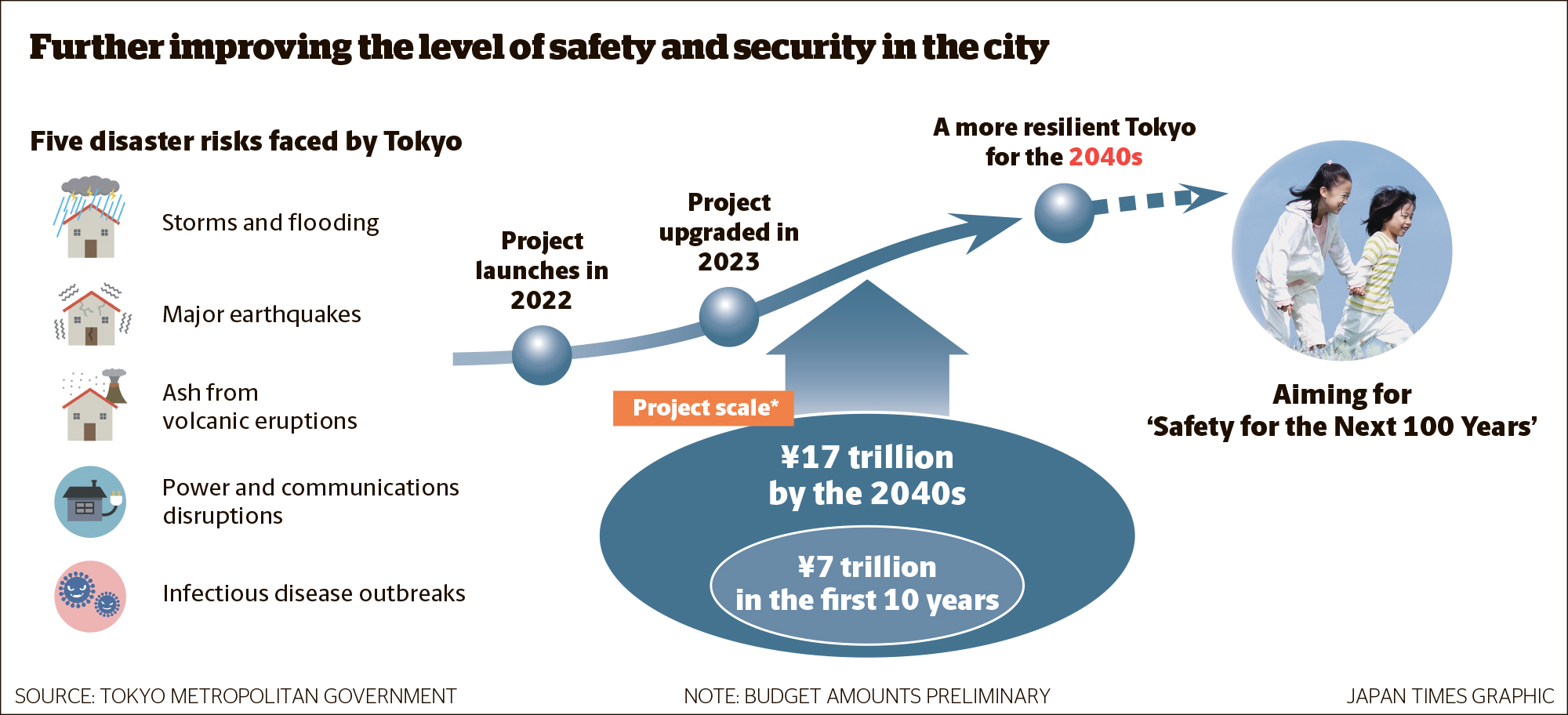
In December 2023, the metropolitan government released Upgrade I of the Tokyo Resilience Project, further strengthening and expanding key initiatives. Planned investment amounts to approximately ¥17 trillion (about $106 billion), including ¥7 trillion during the first 10 years.
Toward a safer, more secure capital
As part of its flood-management efforts, the metropolitan government is accelerating the development of underground reservoirs to regulate the expected increase in rainfall associated with climate change. Tokyo’s stormwater storage capacity, which stood at about 2.56 million cubic meters in fiscal 2020, is expected to reach about 3.65 million cubic meters by fiscal 2035.
Additionally, Tokyo is advancing efforts to develop underground diversion channels to connect multiple regulating reservoirs and ultimately discharge stormwater into Tokyo Bay, beefing up its ability to deal with heavy rain from large typhoons and other intense rain events.
In terms of earthquake countermeasures, the city is promoting the seismic retrofitting of condominiums, expanding emergency stockpiles that support evacuation and shelter operations, and supporting the installation of circuit breakers that automatically activate during earthquakes to help prevent fires.
Together, it is hoped these initiatives will contribute to the development of a city that does not collapse, does not burn and people survive when a major earthquake strikes.
In recent years, the importance of strengthening the resilience of power and telecommunications infrastructure has also become increasingly apparent.
During disasters, people need access to information and the ability to communicate with family members, friends and workplaces. To address this challenge, the metropolitan government is working to increase backup power for mobile phone base stations, expand the use of satellite communications and promote the installation of solar power units and storage batteries.
It is also advancing multiplexing forms of power and telecommunications to ensure that electricity, information and communication will remain accessible during emergencies.
Sharing expertise with the world
Tokyo is also committed to addressing these challenges with other cities around the world.
As leader of the Global City Network for Sustainability, Tokyo promotes the sharing of knowledge and best practices, as well as advanced risk-mitigation technologies, to help address urban challenges worldwide.
At the same time, it applies insights from overseas to strengthen its own resilience.
Tokyo remains committed to protecting lives and livelihoods while ensuring visitors can also experience the same safety and security. As the capital of Japan, we will continue to work toward achieving the vision of realizing the world’s most resilient city.
This article is sponsored by the .


