


Where to watch
While the National Theatre is currently closed, its kabuki productions can be viewed at the following locations.
• New National Theatre, Tokyo
• Sunpearl Arakawa
• Ota City Residents Hall Aprico
Basic elements of a show
• Mie (the dramatic pose)
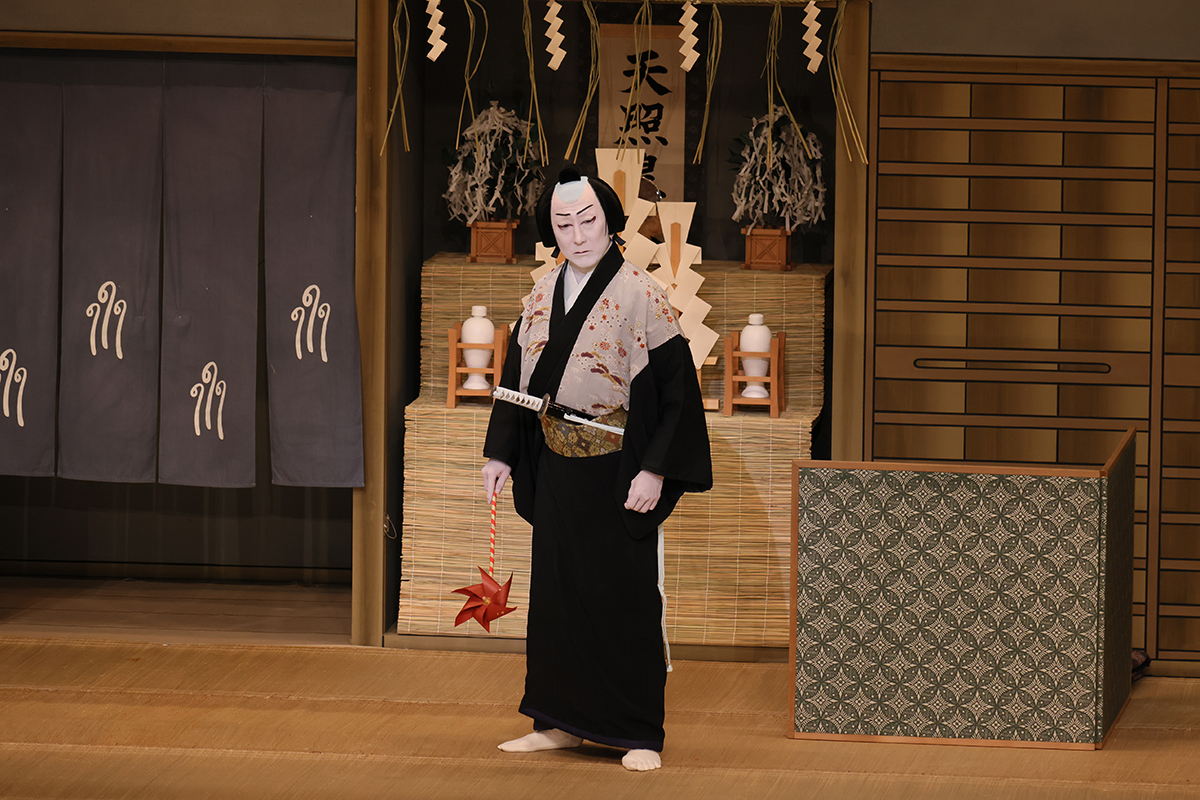
This term refers to a powerful and dramatic pose struck by a kabuki actor at moments of heightened emotion for dramatic emphasis. By freezing in a visually striking stance, the actor highlights the character’s feelings, determination or intensity. This iconic theatrical convention often prompts enthusiastic audience responses, including traditional shouted calls of appreciation and applause.
A mie is typically achieved through a carefully choreographed build-up of movement, culminating in a momentary freeze. The pose is often accentuated by the sharp sound of wooden clappers, which heightens its dramatic impact.
• Omuko (audience calls)
This refers to the tradition of well-timed calls made by experienced and knowledgeable kabuki enthusiasts during a performance. Although hearing audience members call out in the middle of a play may surprise first-time viewers, it is in fact a respected custom that requires a deep understanding of the actors, the performance and kabuki conventions.
These expert calls are carefully timed to acknowledge outstanding moments on stage, such as when an actor strikes a mie. Far from being a distraction, they serve as a form of praise and enhance the atmosphere of the theater.
New audience members are not expected to join in. Instead, they can simply listen and enjoy this unique aspect of the performance. When these voices ring through the theater, they often signal that a particularly memorable moment is unfolding on stage, making them a cue to pay close attention.
• Live sound effects
In kabuki, numerous sound effects — including rain, thunder, wind, footsteps, sliding doors and even birds and insects — are created live by shamisen players and highly specialized stage craftsmen. These artists perform in special areas offstage while carefully monitoring the precise movements of the actors. By synchronizing each sound effect with the action, the musicians and craftsmen create a vivid sense of realism and an immersive experience that contributes to the unique appeal of traditional kabuki.
General manners/etiquette
At a kabuki show, visitors will notice many audience members dressed in traditional kimono. Wearing Japanese attire is a wonderful way to get an immersive experience, but it is by no means mandatory; casual clothing is perfectly acceptable. In the lobby, however, one might spot associates of the actors greeting regular patrons who are dressed in elegant kimono.
While there are no strict rules, following basic theater etiquette ensures a pleasant experience for everyone. This includes being seated before the curtain opens, refraining from talking, turning off electronic devices and avoiding movements that might obstruct the view of others.
Additionally, taking photos or recording video and audio of a show is strictly prohibited. While eating and drinking are part of the tradition, this is best done during intermissions and never during a performance.

