Kabuki is an all-male theater tradition spanning more than four centuries. Since most kabuki works are set in the Edo Period (1603 to 1867) or earlier and performed in an intentionally dramatic manner, it can be difficult even for Japanese to understand the lyrical and highly stylized delivery of the actors, chanter and singers.
However, that does not mean that kabuki can’t be enjoyed by international audiences. While audio guides and subtitles can help follow the stories, it is the fusion of the distinct acting, music, costumes, dancing and staging that draws people in and enables them to empathize with the characters.
Listed as an intangible cultural asset by the government and intangible heritage by UNESCO, kabuki has traditionally been a closed world to aspiring actors because training was reserved for those born into kabuki families or young live-in apprentices who were adopted.
A highly specialized program
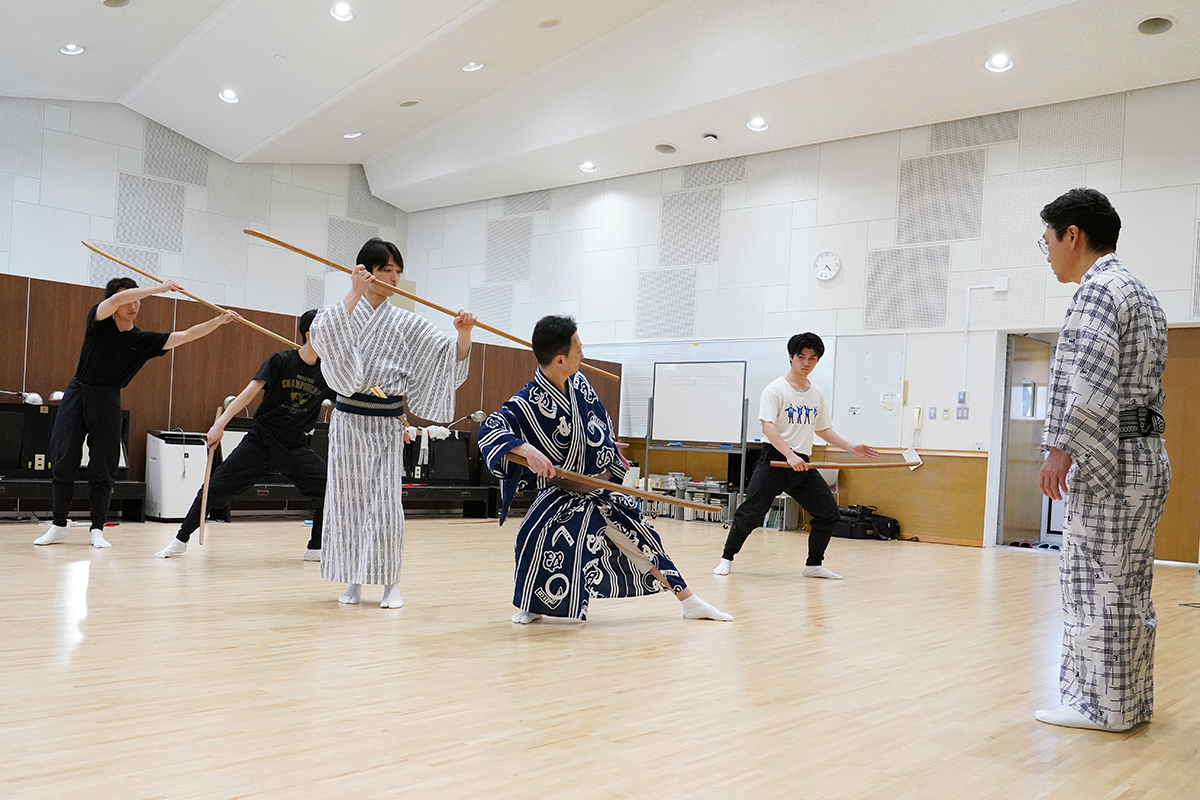
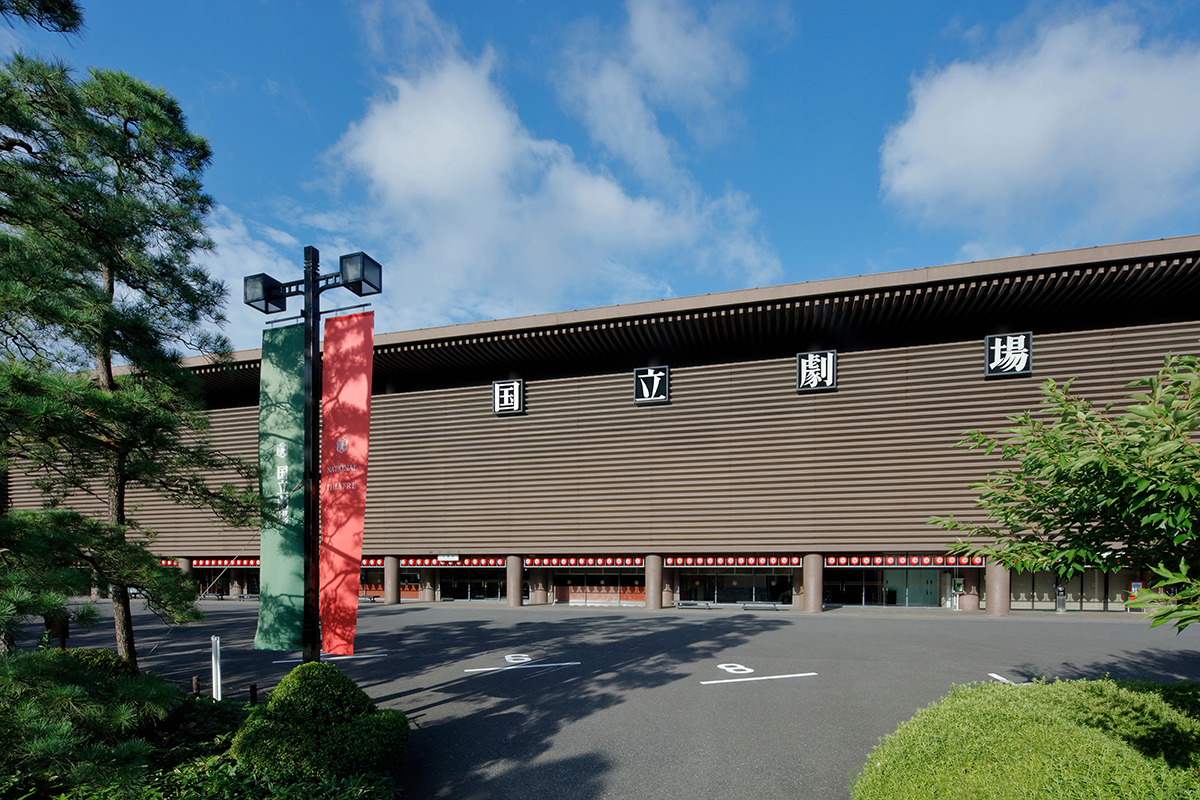
In 1970, a kabuki training program was launched to broaden access to people outside those families. This later evolved into the National Theatre Traditional Performing Arts Training Institute, which recruits and trains students to perform kabuki and kabuki music, bunraku, nohgaku, kumiodori and other classical Japanese performing arts, helping to promote and preserve them.
The institute’s two-year kabuki training course covers the fundamentals and, upon completion, paves the way for a career as a professional actor. Currently, more than 30% of kabuki actors are graduates of the training institute. Over the past five years, nine students have graduated, all of whom have become kabuki actors.
The curriculum is designed to help build a foundation for a career in kabuki through lessons on unique techniques and traditional dance. Lectures and instruction provided by experienced current actors allow students to learn practical techniques. Lectures on history and other topics, however, are conducted by professors and other academic experts.
Nakamura Manju, a distinguished actor, is the principal instructor. Manju has received many awards, including the Shiju Hosho (Medal with Purple Ribbon), which is awarded by the government to individuals who have made outstanding contributions to academia, the arts or sports. He teaches how to perform main roles and some side characters while overseeing the entire curriculum.
At the school, each role is taught by a specialist in a particular archetype, because there are rules for performing each role — whether that be a servant or a waitress.
From imitation to expression
One day in June, Manju went to the institute to give a lesson to second-year student Kaito Uwano, who was waiting in the corridor practicing some movements. As soon as the master appeared, Uwano stood straight up and greeted him cheerfully and respectfully, his face lighting up with energy.
The lesson began with an oral quiz covering topics ranging from traditional units of measurement to kabuki and historical terminology. Uwano had been practicing a female role in the play “Honchonijushiko.” After reviewing a section of script from the previous lesson, they moved on to the next part.
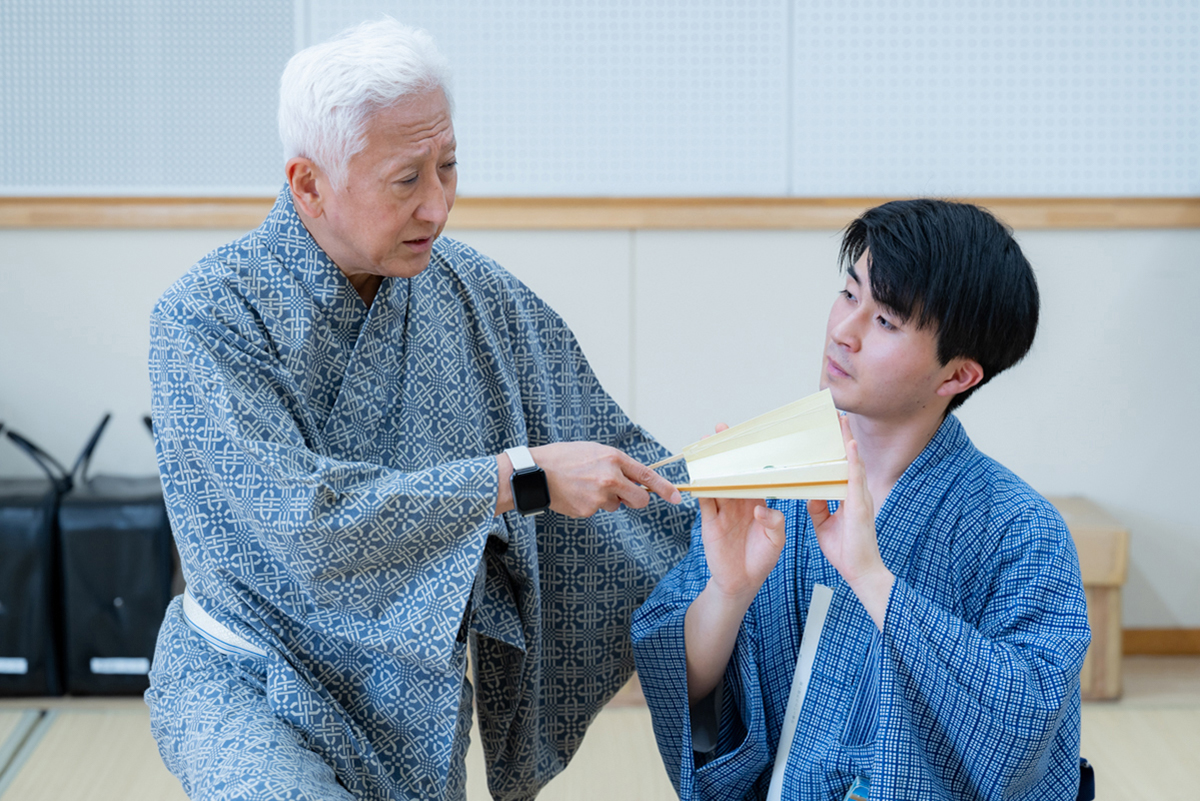
Manju read the section twice and Uwano followed, trying to replicate what he just heard. After receiving corrections on tone, timing, pronunciation and delivery, he took notes on all the advice and practiced a few more times until the section was committed to memory. The next step was to add the action, again by imitating the master as closely as possible.
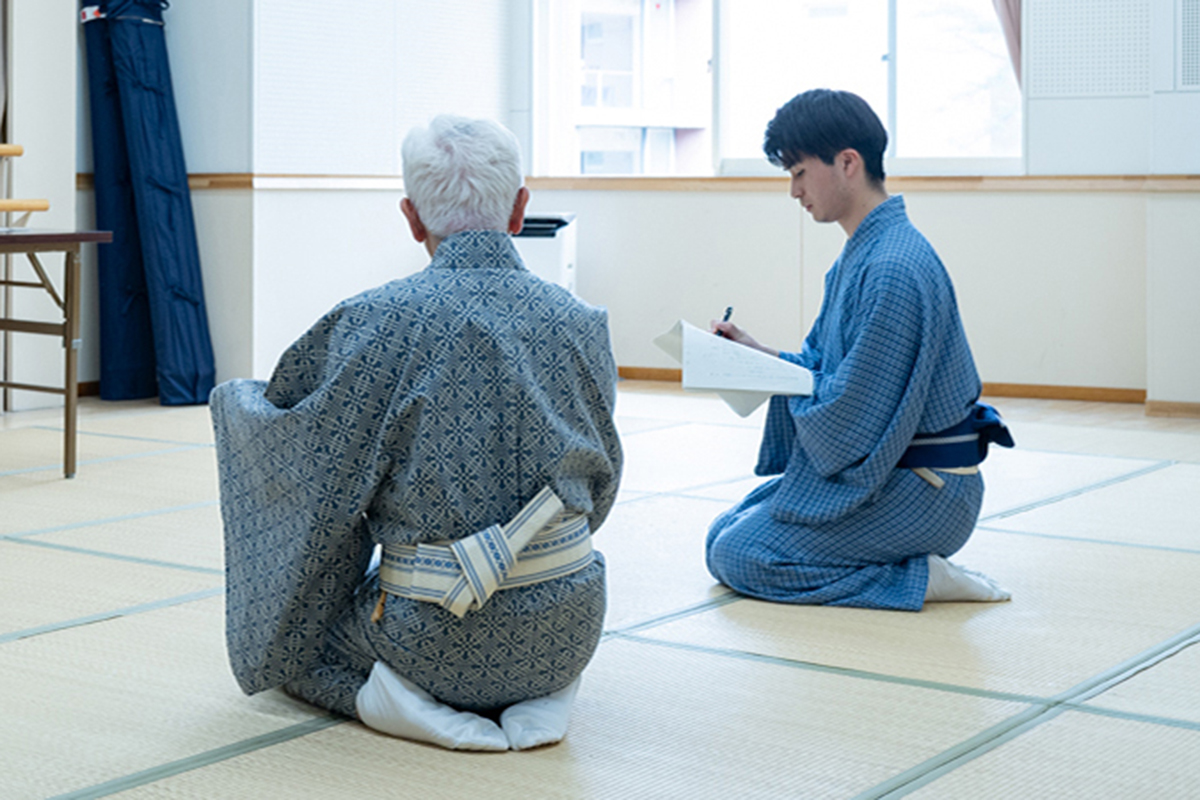
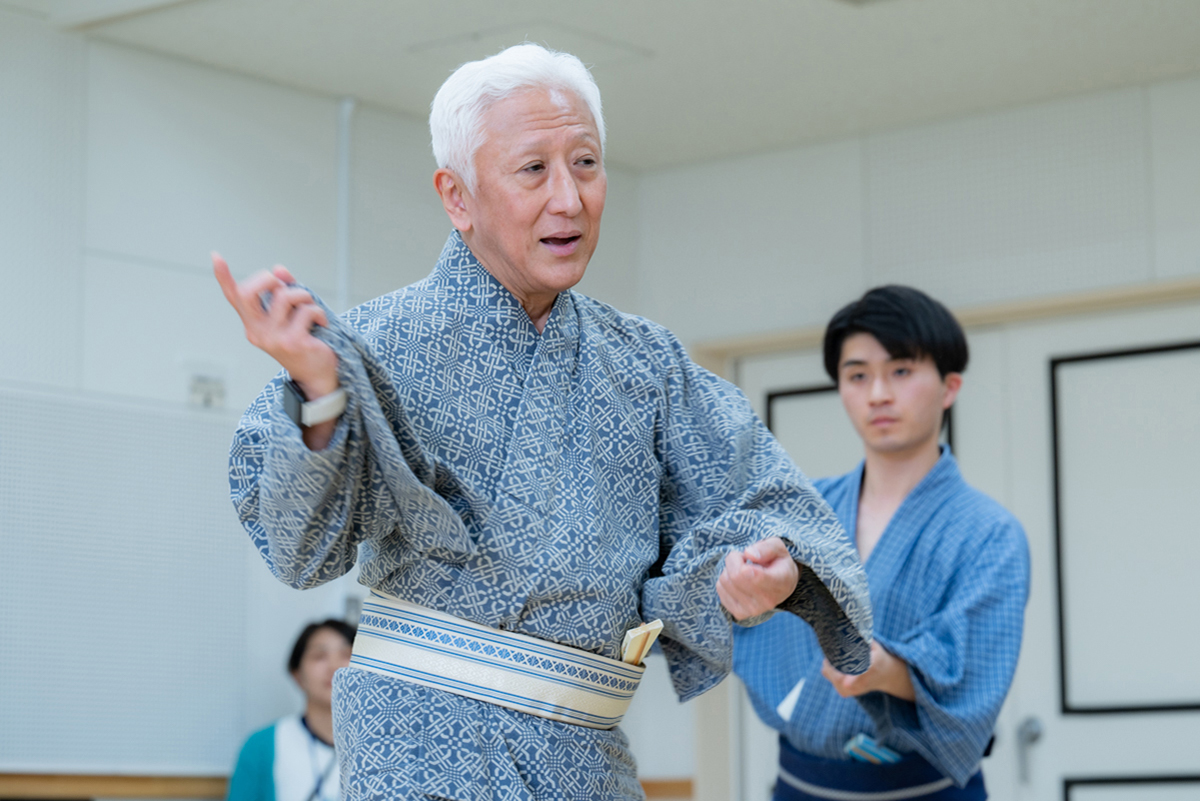
Even without feminine makeup or costuming, when Manju demonstrated how to move as the character, he magically transformed into a maiden, blushing as she stole glances at her beloved.
Uwano then attempted to replicate what he had just seen, making adjustments as Manju provided guidance on how to open a sensu (folding fan), where to look, the angle of his face and his timing in relation to the music. Even something as simple as lifting a leg can look different depending on which muscles are used. Instead of tensing his thighs, Uwano lifted his toes using his knee as a pivot, as advised, and instantly looked more feminine.
However, movements are not just about who the characters are. Manju teaches that every subtle movement carries meaning and emotion, and he always tells his trainees to “act from the onaka,” in this case referring to one’s physical and spiritual center.
Uwano said that he felt a special sensation when he was able to do this. “You read and gather information from the script, feel the character’s emotions deep inside and act faithfully to what rises from the depth of your own being. Then your movements, pauses and words become truly natural,” he said.
Manju said that acting skills and the expression of emotions are particularly important when performing sewamono (domestic dramas). This genre of kabuki depicts the everyday lives of common townspeople in the Edo Period. Unlike jidaimono (historical dramas), which often focus on lordly figures in ages long before the plays were written, Manju said that sewamono “is contemporary theater from the Edo Period and we need to express what was actually ‘alive’ at that time.”
Uwano had been a member of his high school drama club, so he had some experience with modern theater. But he had never been exposed to the world of kabuki.
On his teacher’s recommendation, he went to see the institute. Though he had generally found kabuki shows to be interesting, it was a rare chance to observe one of Manju’s lessons that made him decide to pursue a career in kabuki. Uwano said the lesson covered the fifth act of “Kanadehon Chushingura,” with Manju playing the role of Sadakuro Ono, a villain who kills the main character’s father-in-law.
“I was completely mesmerized. That is how I came to devote myself to kabuki.”
As soon as he entered the institute, Uwano realized he needed to relearn how to produce his voice.
Manju said, “As you know, just like in opera, microphones are not used in kabuki. Actors must use abdominal breathing to produce a powerful voice.”
He emphasized the importance of mastering the basics. “I am teaching various details and difficult techniques, but at the same time, the main focus remains on the fundamentals, which form the basis of everything,” he said.
During his first year at the institute, Uwano tried different methods to practice the basics of voice training. For example, he listened to his own recorded voice and tried taking deliberately off-balanced or challenging postures while speaking.
A lifetime of learning
Manju said there is a significant difference between apprentices from kabuki families, who are exposed to the craft daily and take the stage as children, and trainees who begin at the institute.
He showed video of his 10-year-old grandson, Nakamura Baishi V, enjoying himself backstage, entertaining adults as he performed a one-man show of a famous work with remarkable expressiveness and fluency, even imitating the sounds of musical instruments. He made his stage debut at the age of 5.
Manju himself was born the first son of the renowned Nakamura Tokizo IV, who was celebrated for his graceful portrayal of women. Since debuting at 5 — the same age his grandson did — he has been going strong for over 65 years. He now leads Yorozuya, one of kabuki’s most prominent and long-standing lineages.
To work with great actors and get established, Manju said the two years spent at the institute are crucial. Nevertheless, becoming a full-fledged performer takes a long time.
“It’s a lifelong learning process. I’m still learning myself,” he said.
In fact, even after completing the training course and formally debuting on stage, new actors aren’t given any lines for the first 10 years or so.
“The only roles you’ll get are silent ones, like passers-by,” he said.
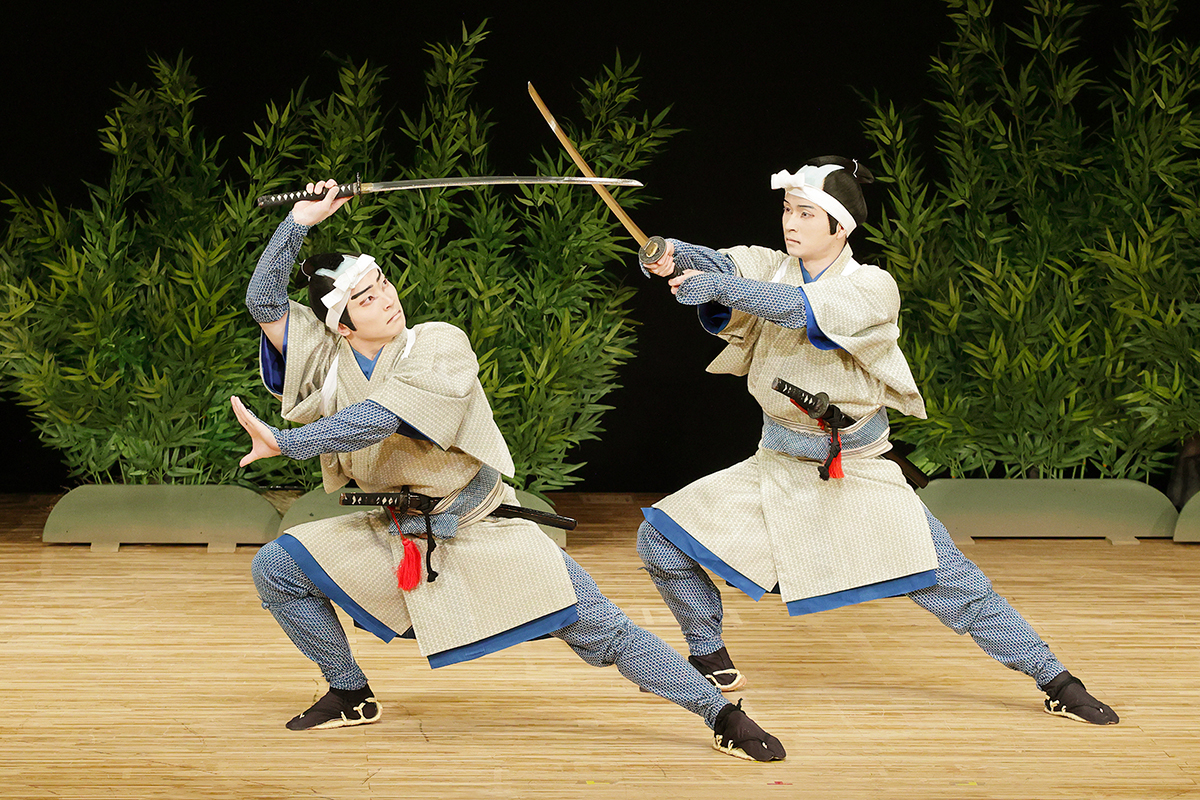
During that time, the tonbo (somersault) can become a valuable skill. A tonbo is performed when an actor is slashed with a sword or thrown in a tachimawari (fight scene).
“Tachimawari is an important element in kabuki, and having skills that are useful in fight scenes increases your chances of appearing on stage,” he said.
“When you are on stage, you can observe the performances of other actors up close. While waiting between scenes, you can also learn by watching the play unfold right before your eyes.”
After accumulating 10 years of experience on stage, actors are permitted to take the exam for attaining nadai (qualified status). Those who pass are recognized as having the skills needed to play named roles. After another 10 years at the earliest — though typically 20 — they will rise to the position of kanbu, the high-ranking actors whose photos appear on flyers.
Kabuki audiences can lose themselves in age-old stories, empathize with the characters and be captivated by the slightest movement of an actor’s fingertips precisely because these performers have refined their skills over many years.
Manju chalks this up to the universal thread of emotions.
“Even if the language is different, human emotions are the same. I hope more foreign visitors enjoy this traditional entertainment, which has a history spanning 400 years,” he said.
Nakamura Manju
Born in 1955, the eldest son of Nakamura Tokizo IV has been performing since childhood. As one of Japan’s leading onnagata (actors playing female roles), he has been guiding the kabuki world and training future generations, serving as an instructor at the institute since 2007 and chief instructor since 2018.
The National Theatre Traditional Performing Arts Training Institute
This school was established to ensure the stable succession of performers in kabuki, bunraku, nohgaku and Japan’s other traditional arts. Run by the Japan Arts Council, it actively recruits young trainees from the general public for its practical curriculum, helping to preserve and promote the nation’s cultural heritage.